


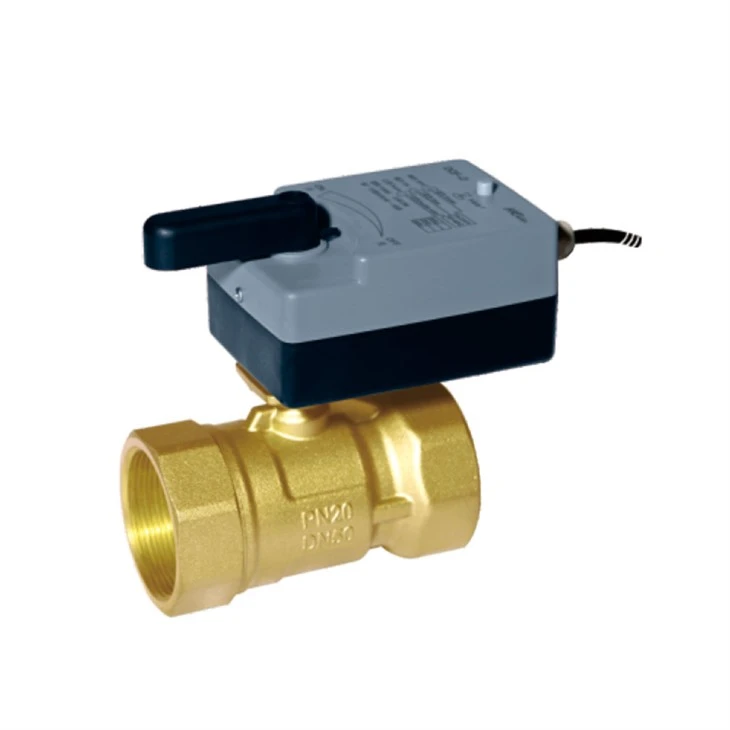
Electric Control Ball Valve Advantages
1. Precise flow control
Electric control ball valves enable precise and repeatable fluid flow control and are ideal for automation systems where precision is critical.
2. Remote automated operation
These valves can be easily integrated into automation systems and remotely operated via electrical signals, reducing manual operations and improving safety in hazardous environments.
3. Stable and reliable performance
Electric actuators provide constant torque and smooth operation, minimizing the risk of valve sticking, water hammer or mechanical wear during frequent operation.
4. Wide voltage selection
Electric control ball valves are available in a variety of voltage types to accommodate different power systems and application requirements.
5. Energy saving
Unlike pneumatic systems that require constant air pressure, electric actuators consume energy only during operation, reducing operating costs.
Product Parameters
Main materials: Forged brass for valve body, PTFE/HNBR for sealing
Valve opening torque: DN15 - DN25 < 1N.m, DN32 - 50 < 2N.m
Actuator torque: 10N.m
Nominal pressure: 2.0MPa
Working medium: Water
Fluid temperature: 5 - 95°C
Stem size: 9x9
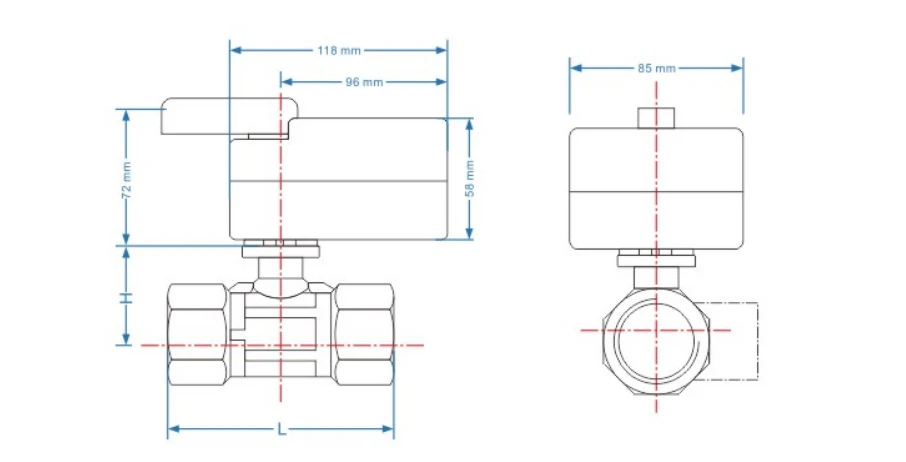
Product Specifications
| Ordering Code | Product Model | Valve Type | DN (Nominal Diameter) | Thread Size | Kv Value | Maximum Closing Differential Pressure (kPa) | Overall Dimensions | |
|---|---|---|---|---|---|---|---|---|
| L | H | |||||||
| 15517 | DQF - B - 232*DQQ - B2K3 - 220 | Two - way | 32 | G1 - 1/4 | 15 | 500 | 103 | 43.5 |
| 15519 | DQF - B - 240*DQQ - B2K3 - 220 | Two - way | 40 | G1 - 1/2 | 24 | 500 | 113 | 48 |
| 15520 | DQF - B - 250*DQQ - B2K3 - 220 | Two - way | 50 | G2 | 42 | 400 | 128 | 53 |
| 15522 | DQF - B - 332*DQQ - B2K3 - 220 | Three - way | 32 | G1 - 1/4 | 15 | 500 | 99 | 43.5 |
| 15523 | DQF - B - 340*DQQ - B2K3 - 220 | Three - way | 40 | G1 - 1/2 | 24 | 500 | 110 | 48 |
| 15524 | DQF - B - 350*DQQ - B2K3 - 220 | Three - way | 50 | G2 | 42 | 400 | 123 | 53 |
| 15544 | DQF - B - 232*DQQ - B2M - 24AC | Two - way | 32 | G1 - 1/4 | 15 | 500 | 103 | 43.5 |
| 15545 | DQF - B - 240*DQQ - B2M - 24AC | Two - way | 40 | G1 - 1/2 | 24 | 500 | 113 | 48 |
| 15546 | DQF - B - 250*DQQ - B2M - 24AC | Two - way | 50 | G2 | 42 | 400 | 128 | 53 |
| 15548 | DQF - B - 332*DQQ - B2M - 24AC | Three - way | 32 | G1 - 1/4 | 15 | 500 | 99 | 43.5 |
| 15549 | DQF - B - 340*DQQ - B2M - 24AC | Three - way | 40 | G1 - 1/2 | 24 | 500 | 106 | 48 |
| 15550 | DQF - B - 350*DQQ - B2M - 24AC | Three - way | 50 | G2 | 42 | 400 | 123 | 53 |
Note: The above are commonly recommended models. You can refer to the following model selection instructions to combine models. For details, consult the salesperson.
FAQ
Q: What are the specific effects of the Kv values of these valves in actual use?
A: The Kv value reflects the flow capacity of the valve. The larger the value, the greater the flow rate of the valve under the same pressure difference. For example, when you select a valve, if the system requires a large flow, you can choose a valve with a large Kv value. If the flow demand is small, you can choose a valve with a small Kv value to ensure accurate control of the system flow.
Q: What should I pay attention to when installing valves with different thread sizes?
A: Different thread sizes correspond to different connection requirements. During installation, ensure that the pipe thread specifications match them, use appropriate sealing materials to wrap evenly, avoid leakage due to thread mismatch or improper sealing, and tighten the torque moderately to prevent damage to the thread.
Q: If you encounter problems during installation and commissioning after purchasing the valve, what support can you provide?
A: We have a professional technical team to provide all-round support. Before installation and commissioning, detailed installation manuals and technical guidance can be provided; if you encounter problems during installation, you can communicate by phone or online at any time to ensure that the valve is successfully installed, commissioned and put into use.
Q: What are the restrictions or requirements of the maximum closing pressure difference on the valve usage scenario?
A: The maximum closing pressure difference determines the pressure difference that the valve can withstand. If the actual working pressure difference exceeds the maximum closing pressure difference, the valve may not close normally or the seal may be affected. You need to confirm the pressure difference of the usage scenario and select the corresponding model to ensure the reliable operation of the valve.
Hot Tags: electric control ball valve, China electric control ball valve manufacturers, suppliers, factory