


Control Ball Valve
Control Ball Valve is a vital valve in HVAC system, which consists of valve body, ball with round through hole, valve stem and driving device such as handle or electric actuator. Control Ball Valve can achieve fine adjustment of flow of various fluids such as refrigerant, hot water, cold water, etc. by precisely controlling the rotation angle of the ball to meet the requirements of different working conditions. With excellent sealing performance, the ball fits tightly with the valve seat, effectively preventing fluid leakage and ensuring stable operation of the system.
Zhejiang Hengsen Industrial Group Co., Ltd. is a high-tech enterprise specializing in the production of HVAC control products, pipe fittings, and refrigeration fittings. Hengsen is located in Zhejiang Zhuji, that is closed to Xiaoshan and Pudong international airports with good geographical and economic advantages. Through the in-depth implementation of the technical standards strategy, Hengsen accelerated the process of transformation and upgrading. Up to now, Hengsen has 5 subsidiaries, covering a total area of more than 80,000 square meters, with more than 500 employees and more than 100 professional technicians.
Why Choose Us
Rich Experience
We have more than 20 years of manufacturing experience in copper valves, water-heating pipes, and air-conditioner parts.
Broad Market
Hengsen has a number of offices in China, and its products have been supporting many Fortune 500 enterprises for a long time, and exported to South America, Europe, the Middle East, and other regions.
Professional Team
Professional team composed of professional technical personnel, from product design, and production to quality testing, every step of professional personnel responsible for.
High Precision
Professional equipment manufacturing high-quality products, automatic production, to ensure the beauty and quality of products.
Competitive Price
Manufacturers' direct sales can eliminate the intermediate steps, and provide the best service and affordable prices.
Good Service
We can provide ODM/OEM service according to customer requirements. Each customer has a person responsible for and is provided with a year after-sales guarantee.
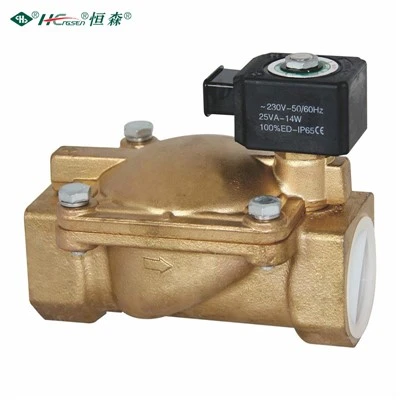
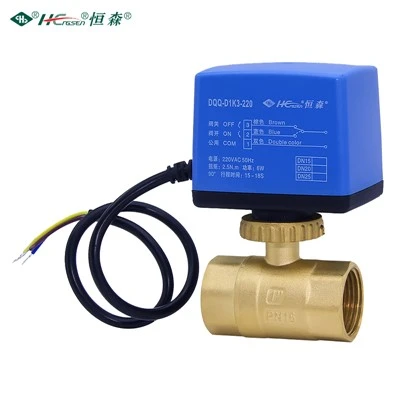
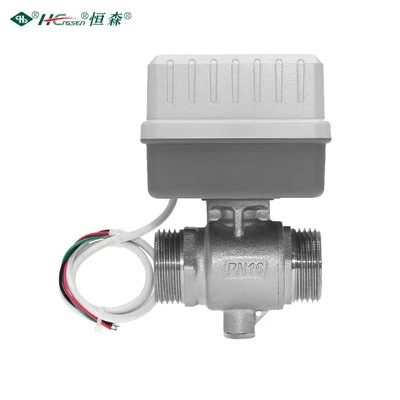
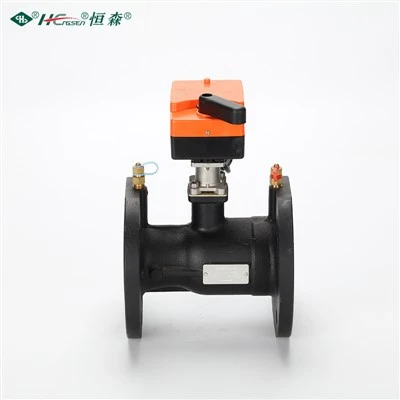
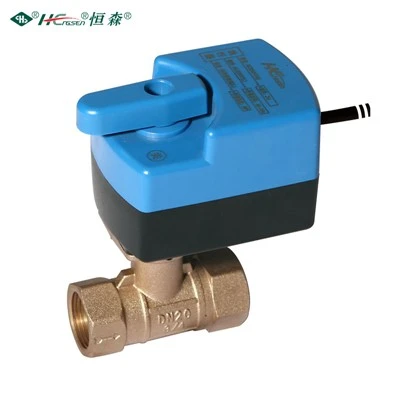
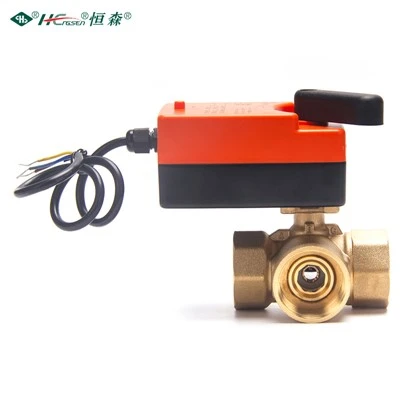
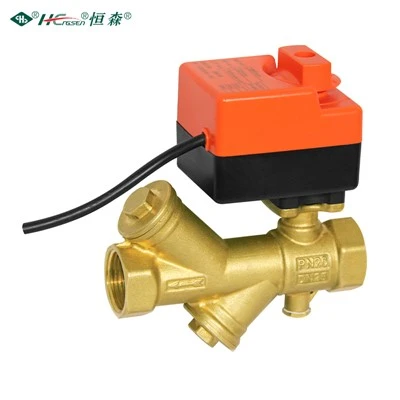
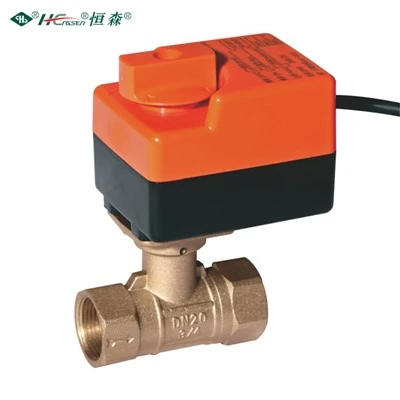
What is Control Ball Valve
A Control Ball Valve is a type of quarter-turn valve with a hollow ball to control flow through it. A 90-degree turn of the valve will position the ball's hole in line with the flow direction, and the reverse will completely shut-off the valve in the closed position.
Benefits of Control Ball Valve


Excellent Shut-off Capability
Control Ball Valve provide a tight seal, ensuring complete shut-off and preventing leakage. The spherical closure design of ball valves allows for a reliable and secure shut-off, even in high-pressure systems. There is little turbulence or resistance to fluid flow when the valve is fully open.
Quick and Easy Operation
They have a simple design and are easy to open and close, requiring a quarter turn of the handle or lever. This quick operation saves time and allows for efficient control of fluid flow. As a result of their simple quarter-turn (90-degree) operation, ball valves are efficient and convenient to use. As the valve is relatively lightweight and small, it is also easy to install and remove.
Minimal Pressure Drop
Control Ball Valve have low friction loss, resulting in minimal pressure drop across the valve. This characteristic is essential in applications where maintaining system pressure is crucial, as it helps minimize energy consumption and ensures efficient flow control.
Wide Range of Applications
Ball valves are suitable for various industries, including oil and gas, chemical, water treatment, and HVAC systems. Their versatility stems from their ability to handle a wide range of temperatures, pressures, and fluid types.
Good Flow Control
Ball valves offer precise control over the flow rate, allowing for smooth operation and modulation. The quarter-turn operation and the ability to achieve full or partial flow make them effective in controlling the flow of fluids in both simple and complex systems.
Low maintenance
Compared to other types of valves, ball valves are simple and require less maintenance. Because the ball valve stem rotates without axial movement, the packing seal on the valve stem does not easily wear or fail. Ball valves are easy to disassemble and repair, and worn parts can be easily replaced.
Materials of Control Ball Valves
Brass
Brass is an alloy of copper and zinc that can be distinguished by its dull yellowish to reddish color, depending on the amount of zinc. It is the most common material for ball valves. Brass is a tough, strong, and durable metal that can withstand high temperatures and pressures. The copper in brass alloy has antimicrobial properties that inhibit the growth and reproduction of microbes on its surface. Brass has good chemical, corrosion, and biofouling resistance.
Stainless Steel
Stainless steel is a type of steel that contains higher chromium content and some amounts of nickel. The chromium content of stainless steel makes it acquire a superior corrosion resistance. Stainless steel is known for its excellent strength, toughness, and durability. It also retains its strength in high temperatures and pressures.
Polyvinyl Chloride (PVC)
PVC is a tough, rigid, and durable plastic material. Compared to brass and stainless-steel alloys, they generally have lower strength but they are cheaper. They are resistant to corrosion and most acids, bases, and salt solutions. However, they are not resistant to aromatic compounds and hydrocarbons. PVC ball valves (*) have a lower temperature and pressure rating, for up to 150 psi and 140°F, respectively.
Polypropylene Ball Valve (PP)
PP is a tough, durable, lightweight, and flexible thermoplastic made from propylene monomer. It offers good resistance to most acids and bases, but has selective compatibility with organic substances and solvents. Its chemical resistance decreases with increasing temperatures. The maximum operating temperature of PP is 82°C. PP ball valves are suitable for regulating the flow of fluids with a wide range of viscosity.
Glass Fiber-Reinforced Polypropylene Ball Valve (GFPP)
In GFPPs, glass fibers are reinforced to polypropylene to increase its dimensional stability, rigidity, and chemical resistance, and to reduce the PP’s coefficient of thermal expansion. Its heat deflection temperature is increased up to 1500C for a 40% GFPP at 264 psi. Reinforcement of glass fibers in PP increases cost-efficiency and makes it operate in more harsher and heavy-duty applications.
Polyvinylidene Difluoride Ball Valve (PVDF)
PVDF is a high purity, durable, thermoplastic fluoropolymer with high molecular weight. It is synthesized from gaseous vinylidene fluoride monomer by a free-radical polymerization process. It is also resistant to abrasion.
High Capacity
The unrestricted flow passage in a fully open position provides a high CV combined with relatively small overall dimensions and is lightweight compared to the same-size globe valves: A given size ball valve can grant a CV coefficient even three times greater than a same-size globe valve. This ensures a smaller and lighter valve, a smaller and lighter actuator, smaller pipeline supports, and overall a money-saving application compared to standard linear valve solutions.
High Rangeability
High rangeability, characterization, and precise modulation are granted thanks to the trim special design. The valve's inherent rangeability is kept between the acceptance limits stated in the IEC 60534 specification using CFD calculation and lab testing based on customers' specifications and flow conditions.
Tight shut-off
When required, tight shut-off is obtained thanks to the well-experienced on-off design (spring-loaded, pressure-assisted floating seats with trunnion mounted ball) against any differential pressures, from very low to extremely high levels. Outstanding tightness capability is granted also when metal seats are required.
Special design for sensitive control
Spring-loaded seat design assures scraping action and continuous contact between seat and ball: Dirty fluids do not stick and jam on the ball surface. Trunnion construction and special low-friction bearings assure low operating torque. So a smooth fluid control is assured for the whole valve service life.
Compact design
Body construction, special design for stem and actuator connections eliminate free-play (backlash) and assure great resistance even against piping forces.
Fast operating time
Quarter turn design allows to use fast actuating devices which can perform emergency operation in a few second to improve the safety of the plant.
Components of Control Ball Valve
Its primary function is to provide a secure and sealed enclosure for the ball, ensuring that the flow of fluids through the valve can be precisely controlled. The housing typically features inlet and outlet ports, allowing for the connection of pipes or pipelines. It is made of a hard and rigid metal, thermoplastic, or thermoplastic-lined metal that protects the components of the ball valve.
The ball is a sphere that has a hole in its center. The hole in its center is called the bore. The bore serves as the flow opening of the fluid when the cross-section of the fluid flow path and the bore is coplanar. Otherwise, the flow is throttled. A ball valve may have a solid ball or a hollow ball. A solid ball has a constant opening diameter throughout its structure, which helps the fluid to smoothly flow at a constant velocity. A hollow ball, on the other hand, has a hollow internal structure, and the space inside it allows more fluid to pass through the valve.
The shaft connects the ball to the control mechanism that rotates the ball. When the shaft is turned, it either aligns the ball with the valve's flow path to permit the flow of fluids or positions the ball perpendicular to the flow path to block it completely. The shaft has seals such as O-rings and packing rings to seal the shaft and the bonnet to avoid leakage of the fluid. The shaft's design and construction must be robust to withstand the pressure and temperature conditions of the system, ensuring reliable and efficient operation.
The bonnet is an extension of the valve housing that contains and protects the shaft and its packing, which is important in high-pressure and high-temperature applications. It may be welded or bolted to the body. It is also made of hard metal and it covers the opening made from connecting the shaft to the external control mechanism. The bonnet can be removable or integral to the valve body, depending on the valve design.
Ball valves have two seats, typically made of soft materials like PTFE (Teflon) or elastomers. These seats form a tight seal around the ball when the valve is in the closed position. They prevent leakage by creating a secure barrier between the ball and the valve body. The upstream seat seals against pressure, while the downstream seat seals against leakage to the atmosphere.
Electric actuators, also known as motorized actuators, are a method for remotely manipulating ball valves and are used for applications where manual operation of the valve is not possible. The mechanism of an electric actuator can be quarter turn or multi-turn depending on its design. Quarter turn actuators are used for valves that can be completely open or completely closed while multi-turn actuators perform more than one turn and multiple rotations.

Common Types of Control Valve
Globe Valves
Globe valves are versatile and widely used for throttling and regulating flow in pipelines. They have a globe-shaped body and a movable plug (or disc) that can be positioned to control the flow rate.
Butterfly Valves
Butterfly valves consist of a flat circular disc mounted on a shaft. They are well-suited for on/off and modulating control of flow in large pipelines. Butterfly valves are known for their quick operation and low-pressure drop.
Ball Valves
Ball valves have a spherical closure element (the ball) with a hole in it. When the ball is rotated, it can either fully open or close the flow or modulate it to different degrees. Ball valves are commonly used in various applications due to their reliability and ease of operation.
Diaphragm Valves
Diaphragm valves use a flexible diaphragm as the closure element. The diaphragm is raised or lowered to control the flow. These valves are often used in applications requiring tight shut-off and contamination-free operation.
Control Butterfly Valves
Control butterfly valves are a specialized type of butterfly valve designed specifically for precise control applications. They have enhanced flow characteristics and control accuracy.
Needle Valves
Needle valves feature a long, tapered needle-like stem that can be finely adjusted to control flow with high precision. They are commonly used in laboratories and instrumentation systems.
Pinch Valves
Pinch valves use a flexible tube (pinched by a pinching mechanism) as the closure element. They are suitable for handling abrasive and corrosive fluids and can provide excellent sealing.
Slide Valves
Slide valves, also known as knife gate valves, have a flat gate that moves perpendicular to the flow path. They are often used in applications involving thick or viscous fluids, as well as in handling solids.
Maintenance Tips for Control Ball Valve
Proper Installation
Ball valves that are installed correctly have a much lower chance of needing repairs or replacement. Make sure the engineer installing your valves is experienced and knowledgeable in ball valve installation and maintenance.
Regular Cleanings
Clean valves last longer since there’s little chance for debris to build up and negatively impact the performance of your piping system. Use a towel to wipe dirt, oil, or dust from the valve casing and a wire brush to clear any build-up from the valve stem or other moving parts. Be sure you use cleaning agents that won’t react negatively with the valve materials: Gas-based or compressed air cleaners work well for metal components, and alcohol- or water-based cleaners are ideal for non-metal parts.
Valve Lubrication
Lubrication keeps your ball valves operating smoothly and prevents abrasion. Lubrication also helps increase the effectiveness of the valve seals, provided it’s applied properly. Stick to synthetic, water-insoluble, oil-based lubricants; avoid any clay- or solid-based lubricants that may build up inside the valve cavity. Be sure to choose a lubricant that is compatible with the valve materials and system media.
Routine Inspections
Have your valves checked by a skilled inspector on a routine basis. For most applications, once a year is ideal, but ball valves in high-pressure and high-cycle applications should receive more frequent inspections.
Scheduled Plant Shutdowns
Annual shutdowns are an ideal time to perform ball valve inspections. Remove valves from the piping system, disassemble them, clean the interiors and replace any broken or worn components, paying particular attention to seals or other rubber parts.
Our Certificate


FAQ
We're professional control ball valve manufacturers and suppliers in China, specialized in providing high quality custom service. We warmly welcome you to wholesale high-grade control ball valve from our factory.
Electrically Actuated 3 Way Ball Valve, High Pressure Electric Ball Valve, Electric Ball Valve