


Zone Valve
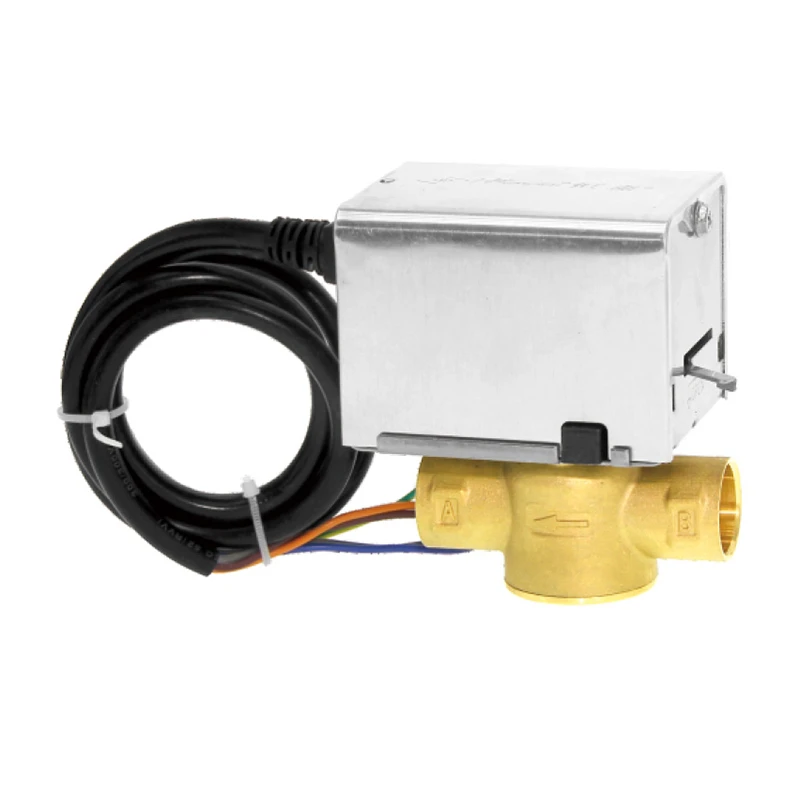
High performance zone valve manufacturer
Hengsen focuses on the design and manufacture of high-quality zoning valves and is committed to providing precise flow and pressure control solutions. Our zoning valves can achieve regional management of pipeline systems, accurately control fluid flow and pressure in each area, and ensure efficient operation and stability of the system. Whether in urban water supply systems, building HVAC systems, or energy conservation, Hengsen's zoning valves can provide flexible and reliable solutions for various application scenarios to meet the needs of different working conditions.
Reliable quality
Industry Leading
Strict Material Selection


What is Zone Valve
A zone valve is a specific type of valve used to control the flow of water or steam in a hydronic heating or cooling system. In the interest of improving efficiency and occupant comfort, such systems are commonly divided up into multiple zones. For example, in a house, the main floor may be served by one heating zone while the upstairs bedrooms are served by another. In this way, the heat can be directed principally to the main floor during the day and principally to the bedrooms at night, allowing the unoccupied areas to cool down.

- Reliable
- Easy wiring (it´s low voltage wiring) so it is made for easy maintenance.
- Zone valves take up less space. They are generally smaller and only need one circulation pump. Simply put, there's more wriggle room. This can be helpful if you are living in a smaller home.
- It uses less energy. Zone valves use around 80% less energy compared to the zone valve option (Zone Pumps use 585 Watts, Zone Valves use 185 Watts)
- Zone valve systems are cheap. It's related to the low voltage. While pumps may cost from $150 to $200, a valve costs around $50 to $60.
- Easily replaceable actuator
- Industry-standard fittings and wiring
- Extra long 1.4-metre cable
- Quick change actuator design
- Supplied with compression fittings
- Standard 22mm and 28mm fittings
- Auxiliary switches
- 2-port valves fitted with auxiliary switches to switch the pump and boiler

5 Things Installers Need To Know About Fitting Zone Valves For Heating Systems.
1) Valve Type
An electric ball valve is the most efficient valve type to be used as a zone valve. They have a lower power consumption, have a long operating life, and close slowly to prevent a water hammer. The valve will stay in the open or closed state with no power and only requires electricity to switch states. Other valve types are typically normally closed, meaning they require electricity to remain in the open position making them less efficient. Majority of zone valves also feature a manual lever to operate the valve in case of a power failure or for testing the system.
2) Thermostat and Valve Wiring
A thermostat’s wiring diagram, voltage, and frequency of the output can affect the valve you select to use or vice versa. Some thermostats have a single output signal, while others have two signals (one to open the valve and one to close it). In the latter case, a 3-point control of the actuator is needed. Ensure the voltage of the thermostat output is equal to the rated voltage for the valve. Oftentimes, the valve also features an auxiliary limit switch. When the valve is turned on and finishes opening, it triggers the switch to turn on the pump and/or boiler to push water through. Otherwise, this wiring is in series with the valve on/off signal.
3) Valve Location
The zone valve needs to be positioned after the boiler and circulator of the central heating system. They can be located either on the hot side (before the hot water goes into the zone) or on the cold side (after the water goes throughout the building). Function wise it does not matter if it is on the hot or cold side, but for valve longevity it is often preferred to have it on the cold post circulation side.
4) Water Pressure
Depending on the size of your building, amount of zones, and length of heating pipes you need to ensure that your circulation pump can generate enough pressure to move water through the valves if they are all open. You also need to take into account the orifice size of the valve, as if it is too small the extra pressure drop will limit the flow through the zones. Sizing the valve appropriately will ensure proper water circulation.
5) Accessibility
The valves should be easily accessible encase maintenance needs to be performed or the valves need to be manually operated. A few common failure methods are: over heating, burnt motor, jammed and won't turn, and a leaking valve. If the valve is failing after usage, it is typically over heating. This means that there isn't enough ventilation to dissipate the heat. Often times you will see a cover removed to help this, but this shouldn't be a long-term solution. If the motor completely burns out, you need to review the power supply and wiring to fix the root of the cause. Then, the motor can be replaced separately from the entire valve. A valve can jam if contaminants are in the line or during long periods of rest. It is recommended to turn the valve on and off at least once a month to ensure proper functionality when it is needed. A leaking valve either wasn't assembled properly or has a failed internal component, which would require replacing the entire valve.
Troubleshooting a Zone Valve That Won't Close

Checking the Power Head
If the motor to the power head has gone bad, the valve can be stuck in an open position. Using a small hammer tap the valve lightly. If the cover closes then that confirms that you have a bad power head. If the valve stays open you may want to continue to troubleshoot for blockages or damage to the valve head. Replacing a power head is fairly easy and doesn't take many steps. You will replace the head just as you remove it making sure to label all wiring as you go along to ensure proper connections.

Checking the Manual Lever
If the motor appears to be working properly on the power head you may need to re-engage the manual lever. If the lever moves freely that can indicate a problem and you can try to following to correct it. Behind the valve flange you should see a small plate with a metal spring attached to it. Reposition the metal plate until they snap and the valve closes. If the valve opens and closes easily this may correct your problem.

Replacing the Valve Assembly
If checking the power head and the manual lever doesn't correct the problems with the zone valve you may need to replace the entire valve assembly. This is the easiest way to replace any internal parts that may be damaged or worn. Replacing the assembly will require you to solder a new valve into place. Adapter kits can be purchased to avoid this, but check with the manufacturers directions to ensure proper installation. When replacing the assembly always clearly mark all the parts as you go along to make for easier installation of the new assembly.
Zone valves may need to be replaced for various reasons, such as malfunctioning, damage, or as part of an upgrade or system renovation. Common failure modes are:
Overheating
Insufficient ventilation for heat dissipation can lead to overheating. While removing the cover temporarily can provide a short-term solution, it may eventually lead to motor failure. Ensure proper ventilation to prevent overheating issues in zone valves.
Burnt motor
Frequent overheating or incorrect voltage/current can cause damage to the electric motor. Check the power supply, wiring, and the root cause of the motor burnout before replacing the motor.
Leaking or stuck open/closed
The zone valve may become stuck either in the open or closed position and fail to move when needed. This can be due to debris or sediment buildup, mechanical issues, or a malfunctioning actuator. Replace the valve if it gets stuck.
Noisy operation
Zone valves may produce excessive noise during operation due to worn-out bearings, misalignment, or loose components. Unusual clicking, buzzing, or grinding sounds can indicate a problem.
Electrical issues
Electrical failures can occur in the wiring, control board, or connections between the actuator and the control system, preventing proper communication and operation of the valve.
A Step-by-Step Guide to 3-Port Zone Valve Replacement
Examine each of the zones to confirm the proper operation of the new valve. Check for any anomalies and make any adjustments as required.
To ensure safety, switch off the energy supply to the heating system.
Stop the water supply to the valve.
If the valve for the zone is located in a region of the system for which drainage is necessary, flush the system until it is above the valve.
Take the electrical connections off that old valve. Note the wires that connect to the thermostat.
Utilize a pipe wrench to connect the pipes on each side of the valve. Put a towel or bucket under the valve to collect any water.
After the plumbing and electrical connections are disconnected, you can take the old valve out of the system.
Use pipe thread sealant, or wrap the threads using Teflon tape over the valve to make sure that the seal is watertight.
Install the new valve in the same direction as the previous one. Connect the plumbing with an instrument for pipe tightening, but avoid tightening too much.
Connect the electrical wires back to the new valve, following the instructions of the manufacturer. Be sure to make a secure and safe connection.
The water supply should be turned on to the valve. Look for leaks and tighten the connections if needed.
If your system needs to be drained of air, make sure you follow the directions for your heating system to remove the air pockets.
The power supply must be switched on for the heater. Make sure that the zone valves are operating correctly.
Zhejiang Hengsen Industrial Group Co., Ltd. is a high-tech enterprise specializing in the production of HVAC control products, pipe fittings, and refrigeration fittings. Hengsen is located in Zhejiang Zhuji, that is closed to Xiaoshan and Pudong international airports with good geographical and economic advantages. Through the in-depth implementation of the technical standards strategy, Hengsen accelerated the process of transformation and upgrading. Up to now, Hengsen has 5 subsidiaries, covering a total area of more than 80,000 square meters, with more than 500 employees and more than 100 professional technicians.
Why Choose Us
Rich Experience
We have more than 20 years of manufacturing experience in copper valves, water-heating pipes, and air-conditioner parts.
Broad Market
Hengsen has a number of offices in China, and its products have been supporting many Fortune 500 enterprises for a long time, and exported to South America, Europe, the Middle East, and other regions.
Professional Team
Professional team composed of professional technical personnel, from product design, and production to quality testing, every step of professional personnel responsible for.
High Precision
Professional equipment manufacturing high-quality products, automatic production, to ensure the beauty and quality of products.
Competitive Price
Manufacturers' direct sales can eliminate the intermediate steps, and provide the best service and affordable prices.
Good Service
We can provide ODM/OEM service according to customer requirements. Each customer has a person responsible for and is provided with a year after-sales guarantee.
Our Certificate


FAQ
We're professional zone valve manufacturers and suppliers in China, specialized in providing high quality custom service. We warmly welcome you to wholesale high-grade zone valve from our factory.
Electric 3 Way Valve, HVAC Valve, Motorised Zone Valve