


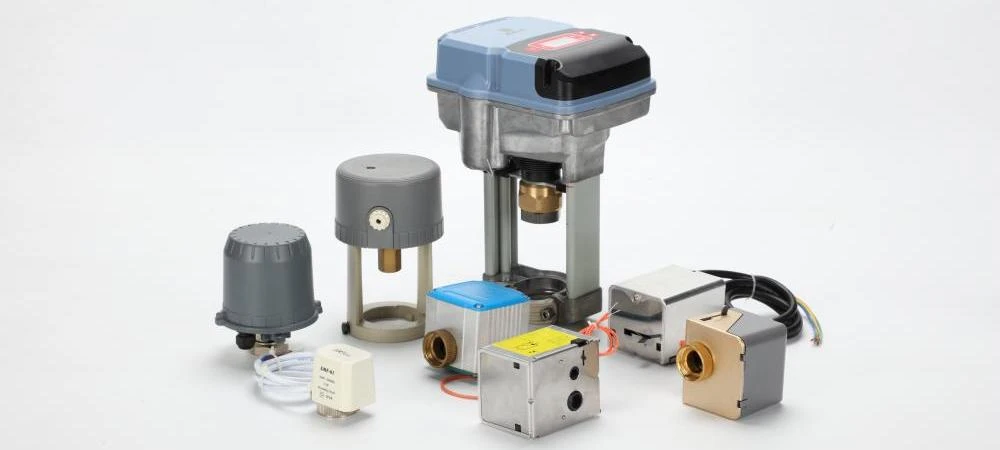
Electric actuators are a type of drive device used with various valves. They are mainly composed of motors, bearings, gear transmission systems and electronic parts. They are widely used and have a service life of about six years. It will vary depending on the usage. In our daily use, we need to pay attention to the maintenance of electric actuators.
How long is the service life of electric actuators?
Electric actuators use non-rechargeable disposable lithium batteries with a service life of six years. When the environment is humid, they will consume too much power and shorten their service life. Electric actuators can only be used for intermittent operations, so they are not suitable for continuous closed-loop operations. Pneumatic actuators have overload resistance and are maintenance-free throughout their service life.
How to maintain and maintain electric actuators
Strengthen the cleanliness management of lubricating oil
The biggest feature of electric actuators is that they need to use lubricating oil, and its viscosity changes with oil temperature. If the viscosity is too low, the wear of transmission parts such as worm gears and gears will increase, causing the transmission accuracy to decrease; if the viscosity is too high, the action will be poor. The cleanliness management of lubricating grease is even more difficult. The wear and aging of transmission parts such as worm gears and gears will cause the infiltration of impurities and water, and the shedding and rust of the internal coating will affect the cleanliness of the lubricating oil.
Eliminate lubricating grease leakage in time
Due to the high frequency and high speed of electric actuators, it is difficult to avoid impact, which is an important reason for the leakage of lubricating grease. Once the lubricating grease leaks, it needs to be solved in time.
Improve the working environment and use conditions of electric actuators
The reliability and life of electric actuators are directly related to their usage, the environment they are in, and personnel knowledge. Only by improving their working environment and usage conditions in maintenance management and putting people first can the service life be extended.
Strengthen maintenance in the early stage of failure
Among all the faults of electric actuators, the proportion of initial faults is generally high. Initial faults are mostly caused by initial errors in design, manufacturing, and installation. It takes a certain amount of effort to discover these initial faults, and it also takes time to solve them. Therefore, maintenance management should be particularly strong during the initial fault period.
Do a good job of data management to prevent occasional failures
Occasional failures of electric actuators are generally difficult to predict. In order to prevent occasional failures, regular inspections and maintenance are required, and the maintenance data and historical archive data of a certain stage are mastered, which is very important for accurate fault judgment and daily maintenance.
Improve the professional knowledge of operation and maintenance personnel
The degree of professional knowledge mastered by operation and maintenance personnel directly affects maintenance management. In recent years, due to the changes in the structure of operation and maintenance personnel, their knowledge and technology of electric actuators have been greatly improved. However, many operation and maintenance personnel still lack the necessary professional knowledge and technology. Most on-site operation and maintenance personnel are in a state of "not quite understanding" electric actuators, which is also the weak link in maintenance management.
Get information on whether integration is possible
In order to facilitate on-site maintenance and management for operation and maintenance personnel, they should have a forward-looking awareness when designing the electric actuator system, fully consider the implementation of maintenance management, and strive to achieve: the system should be simplified, the simple system has a low failure rate and is easy to maintain and manage; the system should be highly standardized, interchangeable, and easy to repair; integrated and combined, easy to adjust and inspect; introduce new technologies such as fault diagnosis and positioning, fault tolerance/error correction, etc.