


In modern industrial automation systems, electric ball valves play a vital role in fluid control. With the continuous advancement of control technology and the growing demand for high efficiency and high reliability in various pipeline systems, electric ball valves have become an indispensable core equipment in many industries such as water treatment, HVAC, petrochemicals, food processing, and medicine. So, what exactly is an electric ball valve? How does it work? This article will deeply analyze the structure, working principle, performance advantages and practical applications of electric ball valves.
1. What is an electric ball valve?
2. Structural composition of electric ball valve
3. Detailed explanation of the working principle of electric ball valve
4. Classification of control methods of electric ball valves
5. Advantages of electric ball valves
7. Selection and use precautions
8. Manufacturer recommendation: Zhejiang Hengsen Industrial Group Co., Ltd.
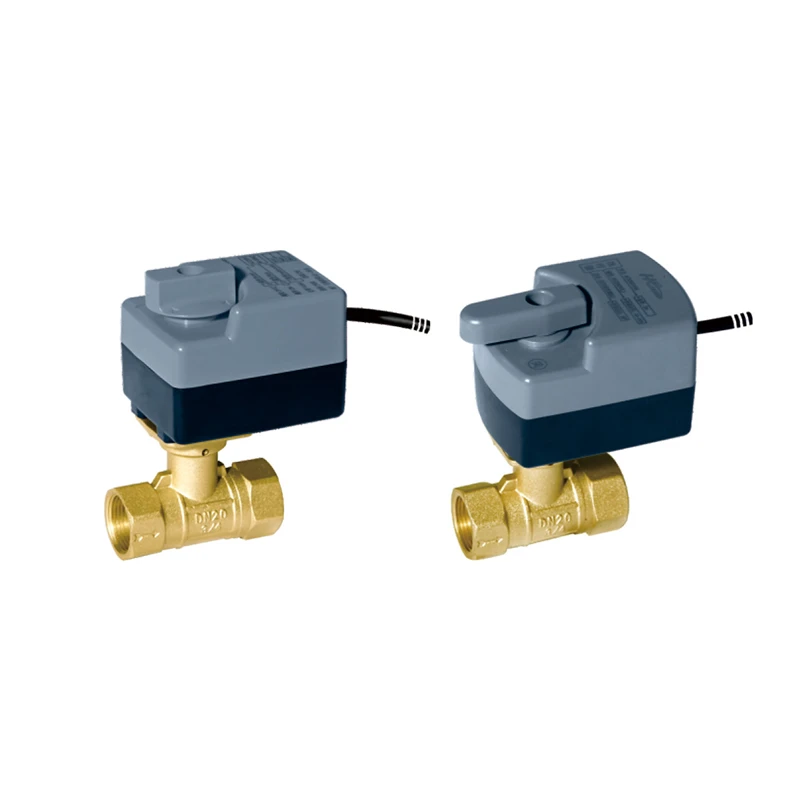
1. What is an electric ball valve?
An electric ball valve is an integrated product consisting of an electric actuator and a ball valve body. Its core is to drive the motor through electric energy to control the rotation of the ball to achieve the opening and closing or flow regulation of the fluid in the pipeline. There is a through hole in the middle of the ball. When the hole is consistent with the direction of the pipeline, the fluid can flow unimpeded; when the ball rotates 90°, the orifice is perpendicular to the pipeline and the medium is cut off, thereby realizing the control function.
An electric ball valve is a type of automatic control valve. It combines the characteristics of traditional ball valves such as strong pressure resistance and good sealing performance with the intelligent control capability of the electric control system, improving the automation and remote operation level of pipeline control.
2. Structural composition of electric ball valve
Electric ball valve is mainly composed of the following parts:
Valve body: usually made of stainless steel, copper, PVC, cast iron and other materials, to withstand fluid pressure and external environmental corrosion;
Ball: with perforations inside, relying on rotation to control on and off;
Valve seat: the part in contact with the ball, usually PTFE or metal, to ensure sealing;
Valve stem: connects the ball and the actuator to transmit torque;
Electric actuator: control part, including motor, reduction gear, limiter, position feedback module, etc.
High-end electric ball valves are also equipped with manual switching mechanism, anti-condensation heating device, communication module, etc. to meet the needs of automatic control in complex environments.
3. Detailed explanation of the working principle of electric ball valve
The basic control logic of electric ball valve is as follows:
Electric signal input: The system sends an open/close or adjustment signal through PLC or control module;
Motor action: After receiving the signal, the motor in the actuator starts to run;
Deceleration device transmission: The motor rotation is decelerated by the gear set to increase the output torque;
Ball rotation: The torque is transmitted to the ball through the valve stem to achieve 0~90° rotation;
State feedback: The limit switch or position sensor feeds back the current opening state to the control system;
Automatic reset (optional): Some models have a power-off reset function to ensure the safety state of the system.
For regulating electric ball valves, the actuator can accurately control the rotation angle of the ball according to the input analog signal, thereby achieving linear or equal percentage adjustment of the flow.
4. Classification of control methods of electric ball valves
According to different control methods, electric ball valves can be divided into:
Switch type: Only supports two states of open and closed, suitable for single cut-off control.
Regulating type: The angle can be adjusted according to the control signal to achieve flow control.
Intelligent communication type: supports RS485, Modbus and other protocols, suitable for building automatic control systems.
Explosion-proof type: uses explosion-proof electric actuators, suitable for special working conditions such as chemical and petrochemical industries.
In addition, different products can also be divided into flange connection, threaded connection, welding connection, etc. according to the installation method to adapt to different pipeline systems.
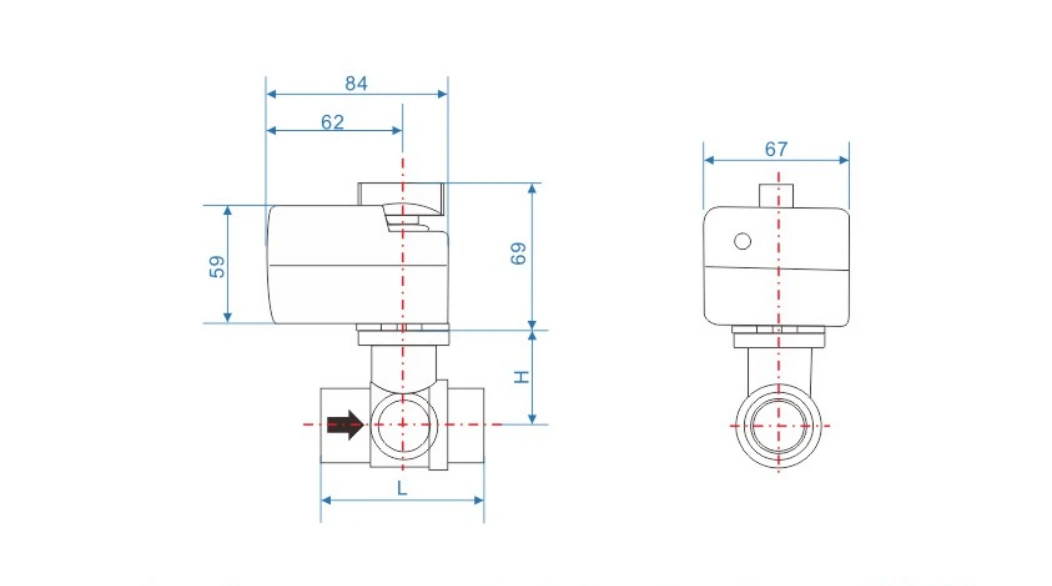
5. Advantages of electric ball valves
Compared with other control valves, such as solenoid valves and pneumatic valves, electric ball valves have the following significant advantages:
Quick opening and closing, accurate positioning: with the feedback module, accurate positioning can be achieved;
Strong sealing: the ball fits the valve seat perfectly, and the leakage rate is low;
High degree of automation: convenient for remote control and system integration;
Energy saving and environmental protection: only consumes power during opening and closing, no power consumption when stationary;
Low maintenance cost: simple structure, reliable operation;
Long life: small friction area of the ball and good wear resistance.
6. Wide range of applications
Electric ball valves are widely used in the following industries:
Heating, ventilation and air conditioning (HVAC) system: used for zoning control of chilled water and hot water;
Building automation: cooperate with building control system to realize intelligent flow regulation;
Industrial fluid system: oil and natural gas pipeline;
Water treatment engineering: sewage purification, tap water transportation;
Food and pharmaceutical: clean fluid transportation;
Fire protection system: realize zoning control in automatic sprinkler system.
In large commercial complexes, electric ball valves are often used for dynamic flow balance of chilled water loops; in water purification plants, they are used for automatic dosing control and pipe network pressure regulation.
7. Selection and use precautions
When using the electric ball valve in practice, you should also pay attention to the following aspects:
Power matching: select an actuator that matches the system power supply;
Working pressure and temperature: ensure that the valve body material and sealing material can withstand the actual working conditions;
Control method: select a suitable signal interface according to the control system requirements;
Protection level: IP65 or above protection level is required for outdoor or high humidity environments;
Periodic maintenance: regularly check the limit switch and electrical interface to prevent failure.
Correct selection and reasonable installation will significantly improve the system's operating stability and service life.
8. Manufacturer recommendation: Zhejiang Hengsen Industrial Group Co., Ltd.
In the field of electric ball valves and HVAC automatic control systems, Zhejiang Hengsen Industrial Group Co., Ltd. is a trustworthy high-tech enterprise. The company is headquartered in Ningbo, Zhejiang Province, China, and has modern standard production lines, precision CNC processing equipment and fully automatic assembly and testing systems.
Hengsen Group focuses on the research, development, production and sales of HVAC system control components. Its main products include:
Electric ball valves, electric regulating valves, electric butterfly valves and other series of intelligent control valves;
Thermostats, actuators, manifolds and other building automation products;
Differential pressure bypass valves, proportional integral control valves and other HVAC energy-saving solutions.
Technological innovation and quality assurance
Hengsen has a number of national invention patents and utility model patents, and all its products have passed ISO 9001 quality management system certification and a number of international certifications. The company has a professional laboratory that can conduct comprehensive tests such as high and low temperature, life testing, air tightness testing, electrical safety, etc. to ensure that every product meets high standards before leaving the factory.
Customer customization and intelligent manufacturing
In order to meet the personalized needs of different customers for control accuracy, communication protocol, interface size, etc., Hengsen provides one-to-one customization services, supports OEM/ODM cooperation, and is equipped with a strong engineering and technical team to provide all-round technical support for project selection, system integration, remote control, etc.
Global market layout
Hengsen products are exported to more than 50 countries and regions including Europe, America, the Middle East, Southeast Asia, and Africa, and have established long-term cooperative relations with many Fortune 500 companies and multinational equipment manufacturers. Its electric ball valves are widely used in commercial buildings, smart homes, hospital purification systems, factory automatic control pipe networks and other projects, and have gained a good industry reputation and customer trust.
9. Conclusion
As a key device for modern fluid control, electric ball valves occupy an important position in various automation systems with their high precision, low power consumption and strong adaptability. A deep understanding of their structure and working principle can not only help us scientifically select and reasonably arrange the system, but also be at ease in future maintenance and expansion.
In the context of the era of pursuing green energy saving and intelligent management, electric ball valves will continue to play a core role. Manufacturers like Zhejiang Hengsen Industrial Group Co., Ltd., which insist on both quality and innovation, will also play a greater role in the construction of global intelligent control systems.