


The butterfly valve is a simple, small, and light regulating and shut-off valve, which is widely used in industries such as petroleum, chemical, electric power, metallurgy, water treatment, food, and pharmaceuticals. Its working principle is mainly to achieve the opening and closing control of the fluid by rotating the valve plate. The butterfly valve plays a vital role in the industrial pipeline system due to its excellent regulating performance, low flow resistance, and easy maintenance.
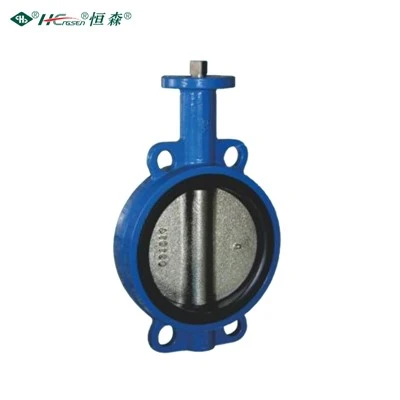
1. Classification by structural form
Butterfly valves can be divided into four categories according to the eccentricity of the internal structure:
Sealed butterfly valve
The central structure design is adopted, and the valve plate and the sealing ring are in complete symmetrical contact in the closed state, which is suitable for medium and low pressure systems. The structure is the simplest, but due to the large friction between the valve plate and the sealing surface during opening and closing, it is easy to wear. It is suitable for occasions with low sealing requirements and low opening and closing frequency.
Single eccentric sealed butterfly valve
The valve stem axis deviates from the center of the valve plate, so that the valve plate leaves the sealing surface first when opening, reducing friction and increasing the life of the seal. It is suitable for water treatment, urban heating and other fields, taking into account both cost and performance.
Double eccentric sealed butterfly valve
The valve stem deviates from the center of the valve body and the valve plate at the same time. The valve plate quickly separates from the valve seat during the opening process, with less friction. It is suitable for systems above medium pressure and is widely used in power plants, chemical plants and other occasions.
Triple eccentric sealed butterfly valve
On the basis of double eccentricity, another space eccentricity is added to form an oblique cone angle on the sealing surface, which completely realizes frictionless sealing. It is mostly used in high temperature and high pressure working conditions, such as oil refining, metallurgy and other harsh environments.
2. Classification by sealing surface material
The sealing material of the butterfly valve determines its corrosion resistance, temperature resistance and sealing reliability:
Soft seal butterfly valve
It is made of flexible materials such as rubber, polytetrafluoroethylene (PTFE), etc., with good sealing and tight closure. It is suitable for water treatment, domestic water supply, low-pressure steam system, etc. But it is not resistant to high temperature, easy to age, and not suitable for high corrosion or high temperature conditions.
Metal hard seal butterfly valve
It adopts metal-to-metal structure, usually made of stainless steel or alloy steel, which can withstand high temperature, high pressure and corrosive environment. It is suitable for high-demand industrial fields such as steam, gas, petrochemical, etc. The manufacturing cost is high, but the service life is long.
3. Classification by working temperature
According to different temperature conditions, butterfly valves can be divided into the following categories:
Normal temperature butterfly valve (-40℃ < T < 120℃)
Applied to conventional temperature systems such as urban water supply, HVAC, environmental protection equipment, etc., and the materials are mostly carbon steel, stainless steel or rubber-lined materials.
Medium temperature butterfly valve (120℃ < T < 450℃)
Commonly used in medium-pressure steam, thermal oil and other systems, the valve body and sealing materials need to have a certain temperature resistance, and metal sealing pairs are usually selected.
High temperature butterfly valve (T > 450℃)
Especially used in high-temperature and high-pressure equipment such as electricity and metallurgy, it is often made of special heat-resistant alloys, and the structural design needs to consider the influence of thermal expansion.
Low temperature butterfly valve (-100℃ < T < -40℃)
Applicable to low-temperature liquid transportation systems such as liquefied natural gas and liquid ammonia. The material needs to have low-temperature toughness, and austenitic stainless steel is commonly used.
Ultra-low temperature butterfly valve (T < -100℃)
Applied in cryogenic engineering, such as liquid nitrogen and liquid hydrogen systems, it has extremely high requirements for material ductility and sealing structure design, and is a high-tech valve.
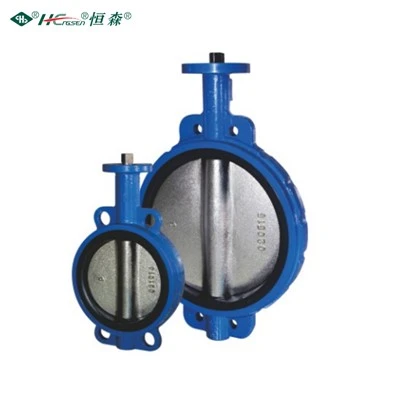
4. Classification by sealing form
The sealing principle of butterfly valve determines its opening and closing performance and working reliability. There are mainly four forms:
Forced sealing butterfly valve
The mechanical force applied to the valve seat when the valve plate is closed forms a seal. The structure is simple but easy to wear. It is suitable for medium and low pressure systems.
External torque sealing butterfly valve
The sealing pressure is maintained by the external force applied to the valve stem by the actuator. It is widely used in automatic control systems.
Pressurized sealing butterfly valve
Pressure is applied to the sealing ring through external forces such as springs or air pressure to ensure the sealing effect. It is suitable for systems with large medium fluctuations.
Automatic sealing butterfly valve
The sealing force is formed by the pressure of the medium in the pipeline. No external force is required. It is suitable for dynamic pipe networks and is energy-saving and efficient.
5. Classification by working pressure
Butterfly valves are suitable for various pressure environments from vacuum to ultra-high pressure:
Vacuum butterfly valve
Applicable to vacuum systems, such as laboratory vacuum devices and semiconductor manufacturing, and excellent sealing performance is required.
Low-pressure butterfly valve (PN < 1.6MPa)
Applied to low-pressure occasions such as municipal engineering and water treatment, commonly seen in plastic pipes and rubber-lined structures.
Medium-pressure butterfly valve (PN = 2.5~6.4MPa)
Used in industrial medium-pressure systems, such as boilers and heat exchangers, the structure needs to have higher strength.
High-pressure butterfly valve (PN = 10~80MPa)
Suitable for high-pressure liquid and gas systems, with precise structure and high safety requirements, commonly used in nuclear energy and military fields.
Ultra-high-pressure butterfly valve (PN > 100MPa)
Specially used in extreme high-pressure occasions, with complex manufacturing process, high-strength alloy materials and special heat treatment.
6. Classification by connection method
The connection method of butterfly valve is related to its installation convenience and reliability:
Wafer butterfly valve
Simple structure, clamped between two sections of pipeline flanges by bolts, small size and light weight, suitable for space-constrained occasions.
Flange butterfly valve
There are flanges at both ends of the valve body, which are directly connected to the pipeline with bolts, with good sealing performance, suitable for high-pressure systems and easy maintenance.
Lug-type butterfly valve
Add lug holes on the basis of flange type, which is convenient for maintenance of the dead end of the system without affecting the operation of the other end. It is suitable for occasions with frequent maintenance.
Welded butterfly valve
Directly welded on the pipeline to avoid leakage risks. It is often used in high-pressure and corrosive sealing requirements. It is not easy to disassemble after installation.
7. Company Strength: Zhejiang Hengsen Industrial Group Co., Ltd.
In the field of butterfly valves and their supporting control products, Zhejiang Hengsen Industrial Group Co., Ltd. is a leading high-tech enterprise in the industry. Since its establishment in 1988, Hengsen has always adhered to the core concept of "safety first, innovation-oriented, and efficient execution", and is committed to providing high-quality HVAC control products, copper valves, refrigeration accessories, pipe connectors and other solutions to global customers.
The company is headquartered in Zhuji, Zhejiang, adjacent to Xiaoshan and Pudong International Airport, with convenient transportation. The company currently has more than 110,000 square meters of production facilities, more than 500 employees, and nearly 100 technicians. It has independent research and development capabilities, supports personalized customization, and can meet the needs of various industrial customers.
Hengsen has established long-term cooperative relations with many Fortune 500 companies, and its products are exported to Europe, America, the Middle East and other regions, and its brand influence continues to expand. The company uses automated production lines and high-precision testing equipment to ensure the beauty and quality of its products, and is a trustworthy partner for customers.
8. Conclusion
As a fluid control device with flexible structure and strong adaptability, butterfly valves play an important role in various industrial systems. Understanding its classification and application will help engineers choose the most suitable model according to actual needs and improve the efficiency and safety of system operation. At the same time, choosing a manufacturer with high technical strength and reliable service is also the key to ensure the smooth implementation of the project. Zhejiang Hengsen Industrial Group Co., Ltd., with its years of technical accumulation and market reputation, provides global customers with reliable butterfly valve and supporting product solutions, and is your ideal cooperation choice.